



The head of the Rosselkhoznadzor agency, Sergei Dankvert, claimed on Thursday that many of those products do not conform to sanitary standards set by the Eurasian Economic Union (EEU), a Russian-led trade bloc. He said a sharp rise in their exports to Russia observed in recent years suggests that they were produced in third countries.
“The range and quantity of products arriving gives us reason to believe that not all of them are from Armenia,” Dankvert told Russian state television. “We also looked into this in 2024 and 2023.”
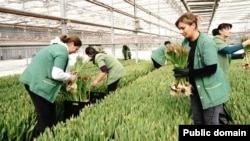
In particular, he described as highly suspicious the fact that annual Armenian exports of cut flowers to Russia tripled over the last three years.
Rosselkhoznadzor seriously restricted those exports last summer, accusing the Armenian government of failing to “ensure the phytosanitary safety and traceability of flower products sent to Russia.” The government’s Food Safety Inspectorate scrambled to address the Russian concerns at the time, stepping up sanitary controls and organizing video inspections of Armenian flower greenhouses for Rosselkhoznadzor. It declined to comment on Dankvert’s latest comments on Friday.
They came the day after Putin’s talks with Pashinian in Moscow during which he publicly warned that Yerevan’s moves to eventually join the European Union are “not compatible” with Armenia’s continued membership in the EEU, which gives Armenian exporters tariff-free access to Russia’s vast market. He noted that Russia remains Armenia’s most important trading partner and supplies natural gas to the South Caucasus state at a significant discount. Putin also said that Pashinian’s administration should not bar pro-Russian opposition groups or politicians from running in Armenia’s upcoming parliamentary elections.
Russia is the main market for agricultural products as well as alcoholic beverages exported by Armenia. In the last few years, Moscow has occasionally and briefly banned some of those exports on sanitary grounds construed by Armenian commentators as Russian retaliation against the Armenian government’s continuing drift to the West.
“We have always felt that on our skin,” an Armenian truck driver regularly shipping goods to Russia told RFE/RL’s Armenian Service on Friday.
The driver, who did not want to be identified, said Dankvert’s statement left him and many of his colleagues bracing for more serious problems at Russian border checkpoints.
“There are concerns because we may be turned away from [the Georgian-Russian border] due to these tensions [between Moscow and Yerevan,]” he said.