


Foreign Minister Ararat Mirzoyan formally asked the EU for such a deployment on behalf of the Armenian government in a February 13 letter seen by RFE/RL. According to diplomatic notes from recent discussions in Brussels, the EU team would be tasked with countering possible Russian interference in the elections scheduled for June 7.
The EU sent a similar mission in Moldova during parliamentary elections held there last September. Two Moldovan opposition parties deemed pro-Russian were barred from running in the elections won by the former Soviet republic’s pro-Western leadership. Moldovan authorities also reportedly blocked Russian or pro-Russian websites accused of spreading election-related disinformation.
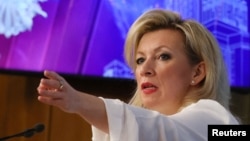
Maria Zakharova, the Russian Foreign Ministry spokeswoman, claimed that the EU is gearing up for a repeat of “the Moldovan scenario” in Armenia.
“As the experience of other countries shows, EU experts’ active and deep involvement during the pre-election period as well as in the context of a possible constitutional referendum will hardly strengthen Armenia's genuine sovereignty,” Zakharova told a news briefing. “Rather, it will do the opposite.”
“At the same time, we took note of the Armenian Justice Armenian Ministry’s statement that the work of the invited specialists from the EU will not be directed against Russia,” she said. “Given this, in case of an appropriate invitation by the Armenian side, we express readiness to promptly organize the dispatch to of a group with a similar task to the country.”
Russian Foreign Minister Sergei Lavrov accused the EU in late January of encouraging Prime Minister Nikol Pashinian’s administration to rig the Armenian elections and seek further confrontation with Russia. Meeting with parliament speaker Alen Simonian on February 5, Lavrov also deplored the Armenian government’s implicit claims about Russia’s “hybrid” threats to Armenia. Pashinian and his political allies have not publicly elaborated on the alleged threats.
Armenian opposition leaders have likewise claimed that Pashinian is trying to secure an EU blank check for winning the elections through fraud or foul play. Deputy Justice Minister Tigran Dadunts denied this last week. He said the authorities in Yerevan want the EU to only assist in the proper conduct of the polls.
Senior representatives of Pashinian’s Civil Contract party have said in recent weeks that it will not “allow” three key opposition groups led by former President Robert Kocharian and businessmen Samvel Karapetian and Gagik Tsarukian to collectively win a majority in Armenia’s next parliament. They regard them as pro-Russian. Moscow has not voiced or signaled support for any of those groups so far.