


Although the Armenian government’s Statistical Committee has not yet released a country-by-country breakdown of exports in June or the first half of this year, the sharp fall clearly resulted from the sanctions highlighting heightened tensions between Moscow and Yerevan.
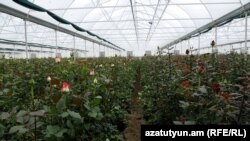
Citing sanitary grounds, the Russian authorities blocked in late May and early June multimillion-dollar imports of Armenian fruits, vegetables, mineral water, flowers, fish and some alcoholic beverages. Moscow imposed the sanctions as it pressed Yerevan to quickly choose between continuing to seek membership of the European Union and remaining part of a Russian-led trade bloc.
Economy Minister Gevorg Papoyan touted over the weekend sharp rises in first-half Armenian exports to the EU, China and India. However, Papoyan pointedly declined to give any absolute numbers or mention the fact that overall exports fell by 6.7 percent in January-June 2026.
Prime Minister Nikol Pashinian has downplayed the impact of the Russian sanctions on the Armenian economy. Papoyan likewise cited Statistical Committee data showing that economic growth in the country remained robust in June. By contrast, the World Bank expressed concern at possible consequences of the embargo earlier this month.
“Should the [Russian] ban continue and widen without mitigation measures, the negative impacts could spill beyond trade and affect growth, prices and social conditions,” it warned in a report.
The ban is already affecting the Armenian government’s tax revenue. The government’s State Revenue Committee (SRC) has reported sharp reductions in taxes collected in the first half of the year from Armenia’s leading companies growing and/or exporting agricultural products. Taxes paid by the largest of them, Spayka, shrunk by almost half, to 1.78 billion drams ($4.8 million).
Last Friday, Rosselkhoznadzor, the Russian government's agricultural oversight agency, also banned imports of Armenian dairy products. The move came more than two weeks after Pashinian’s meeting with Russian Prime Minister Mikhail Mishustin. The latter reportedly repeated the Russian demands during the talks held in the Russian city of Yekaterinburg.
Pashinian has ruled out any reversal of his European integration drive since his party’s victory in disputed parliamentary elections held on June 7. European Commission President Ursula von der Leyen reaffirmed support for that policy when she visited Yerevan on July 2. She promised that the EU will open its market to Armenian products in addition to providing 52 million euros ($60 million) in urgent financial aid to Pashinian’s government.