



“We have received reports of serious injuries,” Siranush Sahakian told RFE/RL’s Armenian Service. “We have no way to verify this ourselves. Of course, I don't think the families have any motive to provide incorrect or false information. At this point, we trust that information.”
Sahakian, who represents the 19 prisoners in the European Court of Human Rights (ECHR), said the injuries include bone fractures and may have been caused by torture. She did not name any of the allegedly injured prisoners.
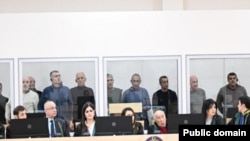
The captives include eight former leaders of Nagorno-Karabakh who were detained during Azerbaijan’s recapture of the region in September 2023. Five of them were sentenced to life imprisonment while the three others, including Armenian-born billionaire Ruben Vardanyan, received 20-year jail sentences in February at the end of yearlong trials denounced by Amnesty International as a “travesty.”
In a statement released from an Azerbaijani prison through his family in May, Vardanyan said that some of the prisoners “have no teeth.” He did not name them or give other details.
According to Sahakian, other prisoners have serious health issues and do not receive adequate medical care in prison. Last week, the wife of the 56-year-old Lyudvig Mkrtchian, who was taken prisoner by Azerbaijani during the 2020 war in Karabakh, expressed serious concern about what she described as a sharp deterioration of his health. She is able to talk to him by phone once in every one or two months.
“He has shortness of breath, dizziness, headaches and problems with heart and lungs,” Hranush Mkrtchian told RFE/RL’s Armenian Service.
Last year, the Azerbaijani authorities banned representatives of the International Committee of the Red Cross (ICRC) from periodically visiting the prisoners to inspect their detention conditions and inquire about their health. The ECHR afterwards ordered Azerbaijan to submit such information to the Strasbourg court.
Prospects for the release anytime soon of the remaining captives remain uncertain even after the initialing of an Armenian-Azerbaijani peace treaty in Washington last August 8. Neither the treaty nor a separate declaration signed by Azerbaijani President Ilham Aliyev and Armenian Prime Minister Nikol Pashinian at the White House commits Baku to freeing them. This fact fueled more claims by Pashinian’s domestic critics that Yerevan is doing little to secure the prisoners’ release. Pashinian and other Armenian officials have denied them.