





“We are transparent in this matter and are ready to answer any questions,” Pashinian told reporters on Thursday. “We just need to understand what exactly the concern is about, and it must be dispelled.”
“This is a global project … and we want to start its implementation as soon as possible,” he said. “The American side is also interested in it. It is necessary to ensure the procedures in a normal way so that the first works on the ground begin at least this fall.”
Pashinian responded to the Iranian ambassador in Yerevan, Khalil Shirgholami. The latter said on Wednesday that the Armenian government must address his country’s “very legitimate and logical” concerns over the planned Trump Route for International Peace and Prosperity (TRIPP) that would connect Azerbaijan to its Nakhichevan exclave through Armenia’s strategic Syunik region.
Shirgholami called for the creation of a “mechanism” to manage “potential risks of U.S. presence and threats to Iran” emanating from the TRIPP. He said the U.S. and Israeli military campaign against the Islamic Republic underlined the perceived risks.
Tehran fears that the transit arrangement could endanger its border with Armenia and lead to U.S. security presence there. Pashinian, who met with Iranian President Massoud Pezeshkian in Tehran on July 3, said that it should on the contrary be interested in the project’s implementation.
“With the implementation of the TRIPP project, we will open a railway connection from the Persian Gulf to the Black Sea, as a result of which opportunities for trade and economic relations between Armenia and Iran will significantly expand,” he said.
U.S. Secretary of State Marco Rubio and Armenian Foreign Minister Ararat Mirzoyan signed a bilateral framework agreement on practical modalities of the TRIPP in the run-up to Armenia’s June 7 parliamentary elections in which Washington openly supported Pashinian. Under that agreement, a U.S. government will gain a 74 percent stake in a joint venture that should build and manage a railway, a road, energy supply lines and other infrastructure in the corridor.
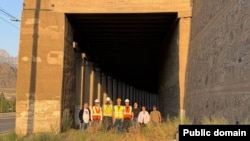
The U.S. Embassy in Yerevan reported on Friday that a team of engineers from the U.S. consulting firm AECOM again visited Armenia and “surveyed the TRIPP site for rail and other infrastructure development” last week. It gave no other details.