



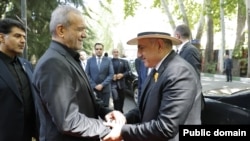
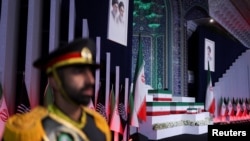
Pashinian arrived in the Iranian capital to attend the start of weeklong funeral ceremonies for Iran's late Supreme Leader Ayatollah Ali Khamenei, who was killed on the first day of U.S. and Israeli forces air strikes against the Islamic Republic on February 28. He joined Iranian officials and clerics as well as foreign dignitaries in paying respects to Khamenei whose coffin was laid in state in a vast prayer hall.
Pezeshkian and Pashinian met shortly before the ceremony. The Iranian president was cited by his office as praising Armenian-Iranian relations and stressing the need to protect them against “foreign interference.”
“Friendly relations between Iran and Armenia should be developed independently of the influence of foreign actors and based on the common will of the two countries,” he said. “Experience has shown that the presence and interventions of extra-regional powers have not only not helped resolve regional issues but in many cases have complicated challenges and caused instability.”
Iranian officials have repeatedly issued such warnings in recent years as Pashinian has sought to reorient Armenia towards the West amid heightened tensions with Russia, its traditional ally. They have expressed serious concern at the Armenian government’s plans to open a U.S.-administered transit corridor for Azerbaijan that would run along the Armenian-Iranian border.
Tehran fears that the planned Trump Route for International Peace and Prosperity (TRIPP) could endanger the border and lead to U.S. security presence there. A top aide to Khamenei described it in December as a serious security threat to Iran. Yerevan has clearly failed to dispel the Iranian concerns with its repeated assurances that the TRIPP will not compromise Armenian sovereignty over the area.
Pashinian was reported to assure Pezeshkian that “Armenia has not and will not participate in any plan, project or action that is against the interests and security of Iran.”
“We do not hide anything in our interactions with different countries and are always ready to discuss any possible concerns or worries of Iranian friends and provide necessary explanations,” he said, according to the Iranian readout of the talks.
The Armenian government issued a much shorter statement on the talks. Pashinian discussed with Pezeshkian “issues of regional significance,” it said without elaborating.
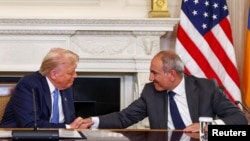
U.S. President Donald Trump pointed to Pashinian’s commitment to the TRIPP when he endorsed the Armenian premier ahead of the parliamentary elections on June 7. Iranian diplomats said, meanwhile, that Tehran remains concerned about the transit arrangement. Iranian Foreign Ministry spokesman Esmail Baghaei said Washington’s “malicious intentions” threaten regional peace and stability.
Armenia’s main opposition groups have also voiced serious objections to the TRIPP. Following his election victory rejected by them as fraudulent, Pashinian said that the project’s implementation will be one of his top policy priorities.