



“U.S. plans to supposedly secure the Zangezur corridor, EU countries' intentions to incorporate Armenia into their military structures, and other unfriendly steps in the region will ultimately lead to further escalation,” said Viktor Vasilyev, Russia’s permanent representative to the Collective Security Treaty Organization (CSTO).
“We are monitoring the situation,” he told an international forum in Saint Petersburg.
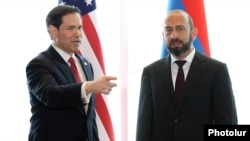
Vasilyev referred to the Armenian government’s pledge to open a U.S.-administered transit corridor that would run along Armenia’s border with Iran. The U.S. government is to own 74 percent of a U.S.-Armenian venture that will build and manage for at least 49 years a railway, a road, energy supply lines and other infrastructure connecting Azerbaijan to its Nakhichevan exclave.
Both Russia and Iran have repeatedly voiced serious concern over the transit arrangement. Tehran fears that it could lead to U.S. security presence along the Armenian-Iranian border.
Moscow is more vehemently opposed to Armenia’s deepening ties with the EU and desire to eventually join the 27-nation bloc. It says that the South Caucasus country can no longer remain part of the Eurasian Economic Union (EEU) while continuing to seek EU membership. Kremlin spokesman Dmitry Peskov said on Wednesday that Moscow still hopes that Prime Minister Nikol Pashinian’s government will choose the Russian-led trade bloc over the EU.
Pashinian remains reluctant to make such a choice after winning disputed parliamentary elections held on June 7. He has made clear that his administration will continue its European integration policy and will not unfreeze Armenia’s membership in the CSTO.
According to Vasilyev, the leaders of Russia and other ex-Soviet states making up the military alliance will discuss in detail the future of that membership. The Russian official did not specify when and where that discussion will take place.