





The bans imposed over the past week were clearly the main focus of Papoyan’s meeting with the owners or top executives of major local greenhouses, even though they were not explicitly mentioned in an official readout released by the Armenian Economy Ministry. It said Papoyan discussed with them “the current situation in the greenhouse construction sector” and “possible ways to solve current problems.”
“The minister noted that in addition to traditional [export] markets, it is necessary to take steps to ensure the representation of Armenian products in international markets,” read the statement.
“The Armenian government is already implementing numerous programs and is ready to take additional steps to complete the diversification of the economy,” it quoted Papoyan as saying.
No details of those steps were reported. Papoyan told RFE/RL’s Armenian Service earlier this week that Yerevan has asked the European Union to allow large-scale exports of Armenian cut flowers to EU member states.
“If they love talking about support [for Armenia,] then let them help us, including with financial instruments, sell our roses in the European market,” he said. “They have said in response, ‘Give us calculations.’ And we have provided the calculations.”
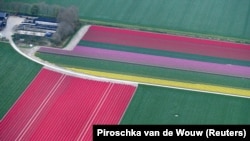
The Netherlands, a major EU member state, is the world's largest flower exporter, accounting for roughly half of the global cut flower trade and earning billions of dollars in annual revenue.
Greenhouse farming in Armenia has expanded dramatically over the past 15 years on the back of the country’s soaring agricultural exports to Russia. The latter has thus solidified its status as the number one export market for Armenian fruits, vegetables, alcohol, flowers and processed food.
Shortly after being appointed as economy minister in early 2024, Papoyan said that easing Armenia’s heavy dependence on Russia for trade will be one of his top priorities. Russia’s share in Armenian foreign trade has not fallen since then. It stood at almost 36 percent last year, up from 35 percent in 2023.
Citing sanitary grounds, Moscow has also banned the sale of Armenia’s most popular brand of mineral water in a bid to step up economic pressure on Prime Minister Nikol Pashinian’s government accused by it of pursuing an anti-Russian foreign policy. Pashinian insisted on Thursday that the Russian sanctions do not pose “any threat to Armenia's developing economy.” His critics believe that their impact will be severe.